Over the last two decades, the Muktabodha Indological Research Institute has created a vast online digital library of Sanskrit texts that is utilized by scholars, students and practitioners around the world. More than 3,000 texts have been digitally preserved and made freely available through this online resource, including over 570 searchable e-texts.
The Digital Library includes three distinct collections:
- The searchable e-text library
- The paper transcripts of the French Institute of Pondicherry (IFP)
- The Vedic manuscript collections of Gokarna
The Searchable E-text Library: This collection includes works of Śaiva literature from Kashmir and beyond, as well as texts of the Vīraśaiva, Pāñcarātra, Śrīvidyā, Śākta, and Nātha traditions. A majority of these items (over 380) were edited from manuscripts under the supervision of the late Mark Dyczkowski. The collection also includes a growing selection of texts on Yoga.
Collection description and history: Overview of the Digital Library; see also “Muktabodha’s Collections” by Harry Spier.
The Paper Transcripts of the IFP: These include over 2,000 mostly Śaiva Siddhānta texts from the French Institute of Pondicherry, which have been designated by UNESCO as a “Memory of the World” collection. In addition to images (over 1,100 PDFs), the comprehensive catalog includes full-text transcriptions of manuscript beginnings and endings.
Collection description and history: “The Catalogue and On-Line Digital Library of the Paper Manuscripts of the French Institute of Pondicherry”
Vedic Manuscript Collections of Gokarna: This archive contains images of Vedic manuscripts from the private collections of the Joglekar, Kodlekere, and Samba Dikshita families from the temple town of Gokarna in Karnataka, India. These collections include texts from the Aśvalāyana school of Ṛgveda and from the Baudhāyana and Hiraṇyakeśin schools of the Taittirīya branch of Kṛṣṇayajurveda.
Collection description and history: “History of the Gokarna Vedic Collection”.
A Note on the Digital Library
The Digital Library has recently undergone a major redesign and now includes significant new curatorial content, including descriptions of the traditions and genres of Sanskrit literature that comprise the library’s e-text collection, plus detailed overviews for new items. The new user interface, at https://muktabodha-digital-library.org, currently focuses on the e-text collection. The legacy interface — still the only interface for the IFP and Vedic collections — remains available at https://muktalib7.com/DL_CATALOG_ROOT/digital_library.
Mr. Harry (Vasishtha) Spier
 The Board of Directors gratefully acknowledges the enormous contributions of Harry Spier, architect and founding manager of the Muktabodha Digital Library. In 2003, Mr. Spier created the original Muktabodha Digital Library collection by digitizing the texts and writing the website software for 75 volumes of the Kashmir Series of Texts and Studies. Through many years of meticulous work and deep dedication, and in collaboration with distinguished scholars of Indology, the Library grew under the stewardship of Mr. Spier into one of the premier resources for digital Sanskrit scholarship in the world today. Harry’s accomplishments are all the more remarkable given that, in addition to his professional background in programming and software development, he is a self-taught Sanskritist.
Muktabodha had identified the KSTS series as a significant starting point for its intention to create an online archive of otherwise inaccessible texts. However, prior to beginning the KSTS project, no single library (at least in the USA) had a complete set of the Series, not even the Library of Congress. Muktabodha had access to a collection of some of the physical books from the KSTS series, which had been purchased in 1982 in Kashmir. But when Harry Spier took up this project, he found many of the books had damaged pages and the series was incomplete. Looking for a way to supplement the texts at hand, he found that there was, however, an incomplete copy in the New York City Public Library, roughly 75 miles from where Harry was living in Upstate New York. Undaunted by the distance, Harry would commute to the Library by bus to photocopy their copies, usually 4 or 5 volumes each trip, one page at a time. Some of the volumes were literally falling apart. The New York Public Library staff would help him find which libraries had the volumes they were missing and acquire them for him by inter-library loan. After each trip he would scan the volumes he had photocopied, page by page, into Muktabodha’s Digital Library database.
Harry made an important discovery in the course of that work: When the KSTS volumes were originally printed in Kashmir, some mistakes were made in the volume numbers, including some that were never used, or assigned to the wrong volume. The printers then overwrote these mistakes by hand with the correct volume numbers, though only in some cases. So not only did no single library have all of the KSTS volumes, but even the cataloguing of the KSTS in the Library of Congress had errors. Having discovered this, Harry was able to document the correct title and volume information for the entire KSTS series.
Mr. Spier was also Muktabodha’s project leader in the collaboration between the Muktabodha Indological Research Institute, the Institut Français de Pondichéry (IFP; French Institute of Pondicherry), and École Française d’Extrême-Orient (EFEO-French School of Asian Studies). The outcome of this collaboration was the online publication of the catalogue and texts of the paper transcripts of the IFP Shaiva Manuscripts collection, consisting of more than 2,000 liturgical, theological and philosophical texts, mostly from the Śaiva Siddhānta tradition. Mr. Spier managed the digitization of the texts, which comprise more than 200,000 pages, and wrote the search engine and catalog software. This collection was added to the Muktabodha Digital Library in 2007, and the collaboration between Muktabodha and the IFP continues to this day.
In 2008, Mr. Spier created a sophisticated search engine and catalogue for the searchable e-text collection of Tantric texts that was being transcribed by Dr. Mark Dyczkowski’s team in Varanasi, while Mark served as Academic Advisor to the Digital Library. In so doing, Harry created a digital resource that was unprecedented for its time, in both scope and scale. Never before had so many searchable electronic versions of rare Sanskrit texts been made freely available for study and research.
In 2014, Harry created the Gokarna collection from previously digitized photographs owned by the Joglekar, Kodlekere, and Samba Dikshita families, consisting of 238 mostly Āpastamba and Baudhāyana manuscripts. Harry compiled a comprehensive catalogue and developed the infrastructure to serve the PDF images.
Mr. Spier was also the managing editor for the Muktabodha publication Paramārthasāra: The Essence of the Supreme Truth by Dr. Debabrata Sensharma. He also typeset the book and created the index for both this publication and the Īśvara Pratyabijñā Kārikā of Utpaladeva by Dr. B.N. Pandit, published by Muktabodha.
Mr. Spier initially retired from Muktabodha in 2017, returning a few years later to continue managing, expanding and upgrading the Digital Library until retiring again in 2025. During that period in particular, he played a critical role in helping to refine the transcription protocols used to create e-texts, a process that is still ongoing in the Muktabodha office in Varanasi, India, under the guidance of scholars in India and the US.
In the announcement of the launch of the Muktabodha Digital Library to the Indology Listserve on November 7, 2003, Harry wrote, “Muktabodha plans subsequently to make available in the form of digital images thousands of texts, primarily from the Shaiva, Shakta, and Vedic traditions.” As Harry said a few years ago, “Through grace and hard work we were able to accomplish that task.”
Dr. Mark S.G. Dyczkowski
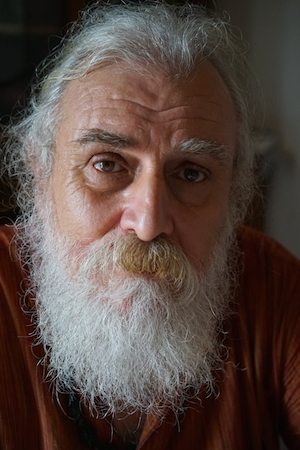
Dr. Mark S.G. Dyczkowski served as Academic Advisor to Muktabodha’s Digital Library project from the end of 2004 until 2018. In that role, he was responsible for choosing the texts for the searchable e-text collection. Drawing on his lifetime of scholarship in this field, Dr. Dyczkowski carefully selected texts in ever expanding circles to create a library that gives an overview of the entire Tantric literature. This literature is crucially important to scholars seeking to understand the pervasive influence of Tantric practice on the development of Hindu worship. He also selected texts in specialized topics such as ‘Hindu ritual manuals’ and ‘worship of the goddess Kubjika’.
Furthermore, it was at the suggestion of Dr. Dyczkowski that Muktabodha first approached the French Institute of Pondicherry (IFP) to explore a potential collaboration. This ultimately resulted in the digitization of over 2,000 mostly Śaiva Siddhānta texts from the IFP collection that were added to Muktabodha’s Digital Library.
Equally significant was Dr. Dyczowski’s training of the team of typists who were responsible for the painstaking task of transcribing manuscripts into searchable e-texts, some of whom continue this work today. This involved teaching the typists to be able to read ancient scripts, such as Newari, and accurately transcribe them into the transliteration format used at the time for data entry. Through these and subsequent efforts, Muktabodha’s searchable e-text library is now the world’s largest searchable collection of Tantric literature.
We gratefully acknowledge the financial supporters whose generosity makes the work of the Muktabodha Institute possible. The Institute is funded primarily by individual donations, as well as the following additional sources:
1. The Muktabodha India Trust receives funding from corporate sponsors through the Corporate Social Responsibility (CSR) mandate of the Indian Companies Act of 2013.
a. CSR donations from Ace Hygiene Products Pvt Ltd are supporting a 3-year collaboration between the Muktabodha India Trust and the Institut Français de Pondichéry (IFP) to transcribe 75 Śaiva-siddhānta manuscripts from the IPF archives into searchable e-texts (for more details please visit https://muktabodha.org/75-saiva-texts-in-new-project-with-ifp-2/). As the transcriptions are completed the texts will be accessible online in the Muktabodha Digital Library e-text collection: Muktabodha Digital Library e-text collection.
b. A CSR donation from ACE Hardware Private Ltd is supporting the transcription of 66 Shaiva Tantra manuscripts by the Muktabodha staff in Varanasi, Uttar Pradhesh, India. As the transcriptions are completed the texts will be accessible online in the Muktabodha Digital Library e-text collection: Muktabodha Digital Library e-text collection.
2. A research grant from Stanford University to Dr. Elaine Fisher supported the transcription of a new collection of Vīraśaiva manuscripts in 2021-22 (for more details please visit https://muktabodha.org/new-virasaiva-collection-for-the-digital-library/). The manuscripts are accessible online in the Muktabodha Digital Library e-text collection, under the subject heading “Vīraśaiva.”
